Earlier Work of Laura Kent Textiles

Laura Kent | Level Four and Five Textiles in Practice | Manchester School of Art

Pages

Thursday, 9 May 2013

Task: Photograph the City

Now that we have decided to run with the idea of creating textiles samples, presenting colour schemes and embellishments from the Victorian era, with photographs of the city of Manchester- both old and new- we needed to get our acts together, and get cracking with taking our photographs. Our final output pieces were now being centred around a textiles theme- this was being done because nobody else voiced their opinions as to a final output, and we were running out of time, which did mean that as a textiles student, I wasn't pushing my creativity as far as it could have been. Nicole pointed out that she  was being taken out of her comfort zone, unable to participate in the textiles pieces, however Rachael suggested that the rest of the group would be able to teach her simple parts that could be done, if she wasn't wanting to use a sewing machine- which was taken happily and positively. As well as the embroidering side, we decided that photographing the city, and incorporating our photographs into the pieces would be a good plan- as it meant exploring a material that we don't usually use in our own practice, and it gave a stronger link to the ideas behind our dressing the city brief. It also meant that the film and media students were able to have their input into the final pieces.

Emily created a very beautiful sample of work, which she shared with us that morning- it held all of our ideas perfectly- bar the idea of photographs, as this was something that was discussed after the making of the piece. I feel that myself and Emily have a very similar style, meaning that we will be able to help one another out with ideas, if we get stuck.


We decided it would be best to split into two groups, that way we'd be able to get things done much quicker. Emily, Jess and myself decided to go and take photographs, as it would be nice to have a wider range of photographs to use, with Sarah and Nicole deciding to come with us. Rebeca and Rachael stayed at the art school in order to do some extra research. Walking around the city, the five of us were able to communicate well, pointing our interesting photographic opportunities, and also bond after our disagreements the previous day. 

When taking my photographs, I tried to capture the colour scheme that we intended on using from the start, along with the old and new aspects of Manchester. 


Tuesday, 7 May 2013

Final Output? No.

Our initial plan for today seemed secure- we were to walk through the city, stopping wherever we seemed fit the interpretation of 'restriction', and, following our newly addressed brief- we were going to dress the city with our bought materials and embellishments. Plans did have to change a little though, as we were called into a very last minute minute to discuss our venue choice. The venue was to be used by ourselves, and another group- that seemed to have contrasting ideas to ourselves. Their brief revolved around colour, where as ours had a much more vintage theme, and having been to the Bay Horse the previous day, we felt that ours would fit the venue style better.

 So after the quick meeting our initial plans started, and we began to walk the city...

I came across a piece of rusty metal, punctured with holes. The colours seemed to fit with our Victorian theme, so I began to create a knitted structure for the piece- creating the idea of restriction through wrappings, and knotting- and also showing our take on yarn-bombing. As well, other members of the group looked at placing their samples in different places close by- drain pipes, broken wood, door frames etc..


After taking a couple of picture, we all knew that it just wasn't working, and with the sun blazing down, it wasn't long until we found ourselves in a very heated argument, with all textiles students disagreeing that this was a good idea after all. It just wasn't possible, or clever for seven of us to be standing around in public spaces, sewing hundreds of sequins onto our  fabrics/ mesh, without any of us actually knowing what the final pieces were going to look like, and some members of the group standing around doing nothing to help with the supposed "collaborative contribution". I suggested that we urgently needed to go back to the drawing board, especially, as bought to our attention in yesterday's presentation feedback- there is less than two weeks left of Unit X(!). 

So back to the student union we went- it was obvious that the heated arguing had caused tension between our group members. Nobody was willing to break the ice, or agree on anything- with the Film and Media girls exclaiming that they weren't being marked on the final output so it didn't really matter what the rest of us wanted to do. This really upset the rest of the group, Jess and myself especially, as this unit is about collaboration and helping one another- be it marked, or not. Lack of communication wasn't helping nor getting us anywhere further- so I felt it was time to take a bit of control and offer my suggestion. I still wanted the message to involve the city of Manchester old vs. new and the colours and embellishments found in the Victorian period- it was just a matter of how. 

Thinking back to my practice- textiles- I suggested that we created samples that represented these ideas- nine textiles pieces, framed and installed at the Bay Horse. Thankfully EVERYONE agreed that this would be a good idea- though rightfully Jess, Emily and myself still needed to think of a way of incorporating the whole 'old vs new city' into the pieces- and the idea of photographs was mentioned. We were to take photographs of the city, places that represented the industrial side of the city back in the day, with newer modern buildings, such as the art school. The nice thing about this was that coincidently it meant we were able to photograph buildings that linked beautifully into our colour schemes. A picture found on pinterest when I began research ideas into textiles pieces was this (below), as it seemed to use the same kinds of materials that we had bought from the wholesalers- I would not be copying this- as it is wrong to do so- I would rather create something off my own back. I think what drew me to the photograph was it's use of a ripped up border, which could be used to determine the use of the photographs I am taking tomorrow. 


So that was that. Everyone said that they wanted to run with this as a solid idea- so we planned to meet to take the photographs and start the sampling the next day. I hope that the conflict can be resolved sharpish because we really don't have time for lack of co-operation from some of the group.

Sunday, 5 May 2013

Artist Research: Eline Le Callennec

When looking into the use of embroidery, I came across the embellishment and print designer, Eline Le Callennec. She graduated in France with a 1st Textiles (Ba) Hons degree, focusing her work on the embellishments found particularly on fabrics/ garments. In the about section of her website, it explains that her embellishments are crafted all by hand- using her built up collection of ribbons, lace, fabrics and many other materials, through-out her life journey. 

 I am absolutely blown away by Eline Le Callennec's standards of working. Her website also states that she takes inspiration from the everyday- so this would include colour, texture, the sights that she sees in her everyday life etc.  I love Callennec's use of details, something that I have grown to love since being in the textiles' world of embroidery. When I am sewing, I love to include little details- for example buttons, or use of hand stitch somewhere in the pieces. 

Eline Le Callennec: http://www.elinelc.co.uk


I feel that Eline Le Callennec's work is perfect in fitting into my brief at the moment, as research into Victorian dress shows that embellishments were found on the clothes, of the people that could afford them. Extra lace, cloth, and use of beading would show the classes of society, with many only dreaming of owning such luxurious garments. 

I am wanting to adapt Callennec's use of embellishment, into a way fit for this 'object' that we are attempting to produce collaboratively. As we are looking at restriction, I feel that the use of wire and mesh will be appropriate- both materials give a rough, unadaptable shape- Using these thoughts, I will try to knit with wire, that way I will (hopefully) be creating something quite exquisite from a material deemed unfit for purpose. As well as this, I am playing around with heavy embellishments of sequins and buttons, and seeing if the idea works well with my pieces. I think that the use of layering up lace is quite a nice way of showing heavy embellishments.

examples of sketchbook work on embellishments


Tuesday, 30 April 2013

Exhibition: Creation/ Deconstruction

I personally think that today has been the most successful day of Unit X so far. Most of the group met this morning for the busy day ahead- all seeming in a much more positive and excited mood since deciding on a final output idea. 

We started the day at 11am, meeting at the Holden Gallery to have a look at the Creation/ Deconstruction exhibition, which seems perfect for our new brief- constructing and deconstructing our collaborative restrictive item around the city of Manchester. The exhibition was very appealing; I was particularly fascinated by the use of candles, allowing themselves to burn out in their own, yet still creating a beautiful piece of art work.


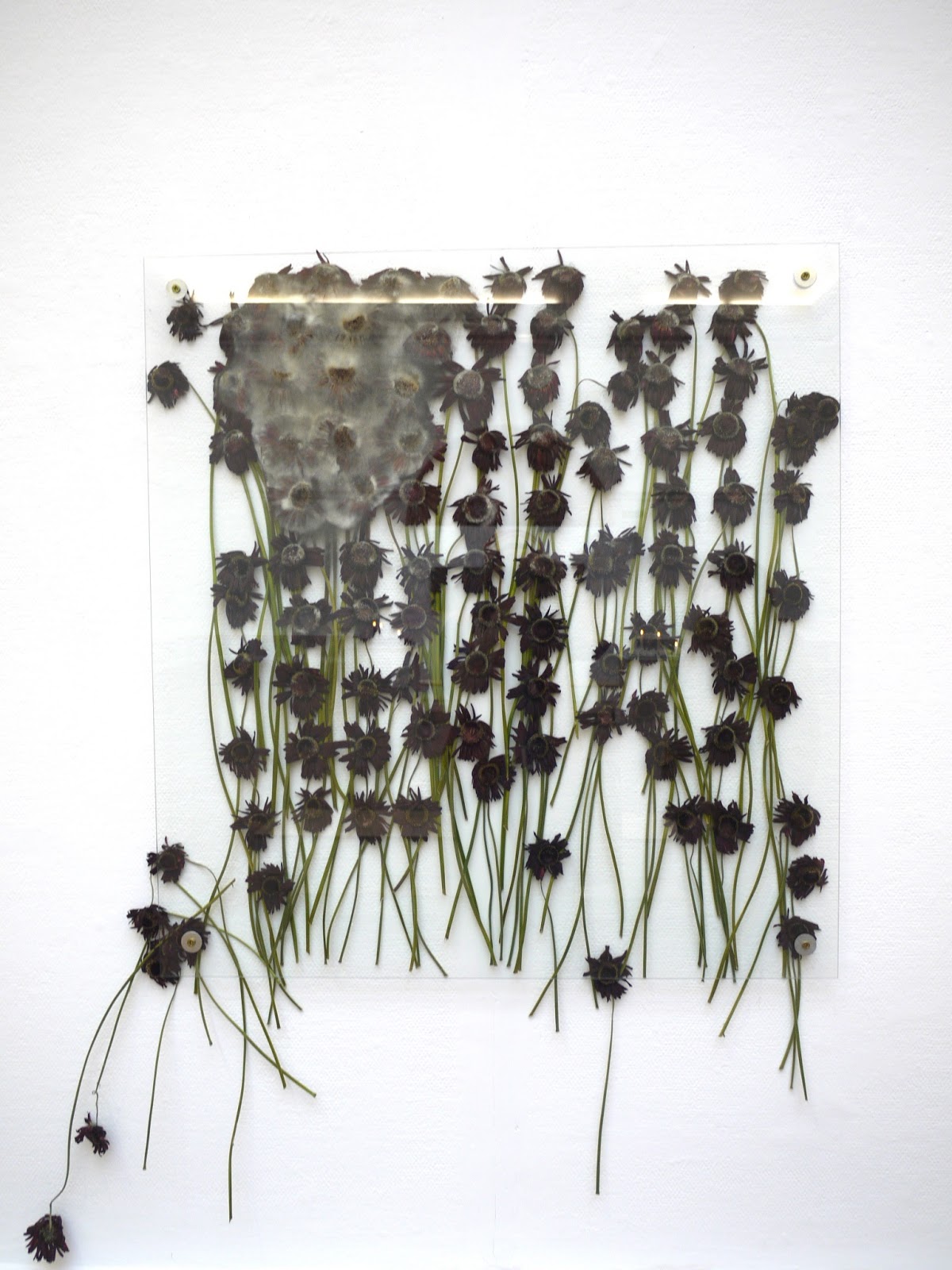
 I also loved the piece with the shoots of flowers restricted behind the glass pane- naturally the flowers are forming mould, decay and gradually falling out of place. I love this idea of letting nature create it's own art work- simply beautiful.


  When reading the write-up for the exhibition, I was drawn in to a specific sentence that I believe sums up our idea of dressing the city, 

' ...the drama of the blank page or canvas waiting to be filled, this tends to romanticise what actually takes place...'

After the exhibition, we all headed towards Piccadilly Gardens- had lunch and discussed the materials that we were hoping to buy from the Northern Quarter. As our final constructed piece is being used to represent restriction, embellishment and Victorian colours, we decided that our main structure should be made from wires and mesh, with dainty details such as sequins and laces attached. I had suggested that we should go back to the wholesalers that myself and Rachael had visited on the previous safari tour of the city- it seemed to hold al of the materials we felt we needed. 

We stopped to look around the Northern Quarter, popping into Affleck's Palace and Abakhan too- where we managed to by a bundle of trimmings, elastics and lace for very reasonable prices. Our trip to Central Trimmings was a fantastic experience- we were able to speak to the owner's of the wholesalers about their business and the stock that they sell- all of which was very interesting. I will definitely be returning there in the near future- we were able to get all of our desired materials for next to nothing, showing that it pays to show your interest in these types of companies. 

Overall I feel that a wonderful and productive day was had by all, and am really looking forward to beginning the process of playing with our new materials tomorrow, after our group presentation.  As well as this we have also chosen our hopeful venue- I shall write about this when it is confirmed.

Saturday, 27 April 2013

Research: Restriction

Following the ideas of restriction, I felt that it would be good research to look into ideas around the topic just to broaden my ideas for our next meeting, when we start to decide the look of our final outcome. I began looking through pinterest at the different examples that I could find around the subject, such as restrictive clothing. Straight jackets seemed to occur quite frequently in my searches; an item, alike to corsets that is able to distort the body through movement. It is also something that is used inside Strangeways prison for some of the refugees, bringing back the link to the city. I then came across a photograph taken in replication of madness through power. It seems to be the perfect piece of inspiration that I have been looking for- managing to combine the ideas of restriction, madness, isolation and a powerful figure in history together, as well as using the types of materials that we had been discussing in our group tutorial.


My other interpretation of 'restriction', was the feeling of isolation, so I began to look at both settings and materials that could portray this idea- mostly harsh materials such as barbed wire. The spaces that I have both found, and photographed are linked to the idea of abandonment, and isolated places- easy to find around Manchester. 


As mentioned in my previous blog post, as a group we have decided that the aim our the final output will be to achieve a set of photographs that are able to portray the ideas of restriction and isolation, as well as linking the old city to our contemporary take on the Victorian era. Next week we are going to be looking around the city for places that appeal to this specification, and places that will give our final output chance to blossom.


Friday, 26 April 2013

Unit X Meeting

This afternoon we had our weekly meeting in the Union bar for lunch and catch up on the last few days' worth of research. We decided that today really had to be the day that we decided on a solid final piece idea as we are very close to hitting our three week deadline. Using the ideas from Tuesday's meeting, we have confirmed that our piece is going to be based primarily on our under-lying theme of the whole unit- restriction. This idea coming from both the restrictive clothing that was worn by women in the Victorian period, and also the influenced by the visiting of Strangeways Prison wall on our Northern Quarter safari. 

Our main techniques are going to be influenced by the main Victorian colours - red, gold, black, blue and white- and finished with embellishment, similar to those found on the era's clothing. We are planning to use knit, print, embroidery, appliqué and embellishments in order to create restrictive pieces that will be tied around Manchester, and photographed. I personally felt that this was a much more interesting idea than making a cushion/ wall hanging. By wrapping our piece around objects in Manchester, it also means that we are targeting the brief of dressing the city, hands on. 

The materials that we are going to need for this final piece have been influenced by our own personal research ideas- Rebecca and Emily suggested that fabrics should be used in order to create our piece, with myself and Jess then thinking about more aggressive materials such as wire, and leather. We are taking the idea of yarn-bombing and adapting it into a way to suit our research. Embellishments will give the piece extra beauty, as well as an extreme look - both of which help to back up the idea of restriction through clothing. 

I came out of the meeting feeling very excited to begin making these pieces, as well as having a much more positive outlook on unit x. Truthfully the unit has not appealed to myself for the past week or so, mostly because I felt like it was unfair to be changing the brief, and also that research and development were becoming tedious, and that our textiles practice was becoming a little lost. I am so glad to be back in the new building and making samples on the knitting machines, and shall really look forward to next week. 

We have decided on a timetable for the start of next week, with Monday being very exciting. We are first going to meet in the Holden Gallery in the morning to have a look at the construction/ deconstruction exhibition, which will hopefully be very helpful, as it is the same idea that we are using for our output - taking an object and wrapping it in different places. We are then going to have a quick discussion regarding the materials that we are going to need for the final piece, then head for lunch before going to the Northern Quarter in search of materials, photographic locations and possible venues for our pieces.

Thursday, 25 April 2013

Unit X Tutorial

On Tuesday afternoon the group and I met up for a tutorial with Julie,  to see how we were getting on with the change in brief. We had all been trying to think of ways to incorporate our current research on Queen Victoria's reign in 1838, and our new brief together, which was proving difficult.

We decided to sit down and look back at the original brief once more- looking at the idea of dressing the city. Our first take on this phrase 'dress the city', was to think of ways to highlight the Victorian era through decoration of an object- what this object was, we weren't sure yet. We threw around the ideas of wall hangings and cushions at first, however I did mention that it concerned me that these objects didn't really fit any kind of purpose, and that the final output could possibly be much more interesting. I also suggested the idea of yarn-bombing, something that appears to be quite popular at the moment in the artistic industry. This type of work would fit the idea of dressing the city perfectly- almost like wrapping Manchester in a big wooly jumper.  It seems to be an idea that can be adapted pretty much any way we feel, and mot of the group have had experience with knitting machines before so we are all able to use these strengths to make some interesting pieces. I have been collecting some imagery and research to do with yarn-bombing on my pinterest page.


With our idea of a final output beginning to slowly merge, we started to think about the materials that we would need to create this unknown object, and the rules that we were going to set ourselves for the visual side of this. A vast majority of our group's research has focused upon the idea of colour, embellishments and restriction. These are the three major things that we feel need to be included in our final output so that the first four weeks of our work isn't completely forgotten about when we begin to dress the city.

As a result of creating these pieces/ 'objects', our final output lay along the lines of taking photographic recordings of these outdoor installations around Manchester, and exhibiting them. Photography is something that interests myself, and the rest of the group, and as none of us have any experience behind the camera, it will come as a challenge to us all.

The meeting went incredibly well, and we have decided that we need to meet on Friday to discuss our next plans for the upcoming weeks, and to think about where we are going to be installing our final output pieces. By Friday we have decided to all research the ideas of yarn bombing, restriction and also to look at the way that art work can interestingly be installed in a gallery space.


Tuesday, 23 April 2013

Research: Strangeways

Following the idea of trying to link the City of Manchester, to our current ideas of restriction, I decided to look closer at Strangeways prison. To me, the first thought that comes to mind when hearing is 'prison' is the restriction of movement- having all resources of freedom taken away. I then think about barbed wiring, high walls, deserted spaces. All things that I consider as lonely, and dangerous. 

When wandering around the city, I gathered first responsive photographic evidence of the prison. At glance, Strangeways looks like a beautiful piece of architecture- ironic in comparison to the refugees contained inside. It's high walls and enormous amount of security give off a sense of eeriness- questioning the ideas of what it must be like inside ...


When creating our final piece, whatever that may be, I think that it would be interesting to incorporate the prison into it- whether that be through the inspiration of restrictive movement, or the fact that it was Queen Victoria that opened the prison- this vital piece of research makes the link towards strangeways and our work seem appropriate to use. 

Wednesday, 17 April 2013

Revolt Meeting

This morning Jess and I attended a meeting with Julie and other revolt members to discuss the progression of Unit X.  After talking as a sub-group yesterday, although we all have some really interesting research and development ideas, we feel that Unit X isn't exactly serving a purpose alongside everything that we have been taught over the past year. Unit X has always felt like a massive burden to crack- especially this absurdly random number 175. Luckily this is the same opinion that a lot of the Revolt members are feeling- so we are now taking a different route.

Julie proposed that we go back to the original brief and attempt to unpick it. We are using the idea of 175 to celebrate the anniversary of Manchester School of Art, and to our overall aim is to 'dress the city'.  I've thought about this new perspective for a while, and agree that it is going to be a much more positive approach to the unit.  

"Manchester School of Art... the name both reminds us of our historical traditions and our contemporary art and design practice, thus placing the theme old vs new at the core of our school's identity... this is about questioning the conventional and bridging the gap between what is possible and what is acceptable"

There are so many ways that we would be able to go about this new idea- but one thing made clear was that we are not to start again from scratch- but to move forward and attempt to morph our original ideas to link in with this concept. On first thought without doing any physical research, I have thought of a few rough ideas that I would like to propose to the group. 

My key research has been centred around Victorian clothing- the idea of colour and restriction- and Queen Victoria/ The Queen of Hearts ( Alice in Wonderland concept). Just off the back of this- I instantly began to think about the concept of Manchester and the cotton industry- something that our city is very well known for. Secondly, the idea of restriction; on our tour of the Northern Quarter, we passed Strangeways Prison. This would be a perfect link to the idea of restriction through physical movement. The idea of colours and their symbolisms/ Alice in Wonderland link is going to have to be thought about a little more in depth, i'm not completely sure if I'm going to be able to sculpt that into anything yet...

Hopefully by tomorrow the group will have looked back at their original research and thought of other interesting ways that we may be able to sculpt our development.


Wednesday, 10 April 2013

Northern Quarter Safari

Myself and unit X friend, Rachel, decided to sign ourselves up on an adventure safari tour of the Northern Quarter. We thought it'd be a great experience to go and see the main sites around Manchester's past thriving textiles industry, and become familiar with the wholesalers around the city. It was a great experience, and it seemed that every corner held some sort of interesting historical facts and artist flares . I was so excited to see the old textile themed street signs, and the old weavers' houses.

As well as this, in Piccadilly Gardens we stumbled across a grand statue of Queen Victoria - placed there in honour of her time as heir to the throne . It's interesting to see that we've picked a unit x project that has some sort of connection to our home city . I am going to start researching into this topic to see what interesting facts I can find.


To see the rest of my safari photographs around manchester, follow this link to my pinterest page :  http://pinterest.com/lauramaykent/northern-quarter/


Monday, 8 April 2013

Unit X: Linking Ideas

Today, our Rebel group met for the first time since Easter break. When we arrived at Hilton House it was lovely to see one another again, and we were able to have a quick catch up to see how each other's holidays had been. 

After hellos, we went around the group individually, and listened to one another's ideas and the ways in which we had all interpreted the idea of 175 and Queen Victoria's coronation further. Both myself and Emily had looked into the different fabrics and clothing that appeared in the Victorian era- looking at colours and embellishments that could be found in the textile industry. I had also looked a little closer at the actual coronation of  the Queen- ie. street parties and celebrations that took place around the time. Rebecca has taken to a similar route- exploring the idea of restriction through garments such as corsets. Nicole's researched touched on part of mine- through looking at the colour black, she had interpreted the research of the mourning of Prince Albert, and then taken a step further to look at mental illness linked to depression/ mourning. Finally, in complete contrast, Jess had looked at the idea of Jack the Ripper, and prostitutes in the era, which bought a link between herself and Rebecca's ideas. 

Luckily I had bought some larger pieces of paper, and pens with me, so our next task was going to be to attempt to link all of our ideas together successfully.  The posters beneath are the outcomes of this task - colour co-ordinated into five main subject areas. We have all decided that now we know how we are able to link our ideas together, that we should start on our visual research and meet again later in the week to discuss how we are going to take this development further, and maybe even start looking at possible ideas for a final output . 


Tuesday, 2 April 2013

Research: The Great British Sewing Bee

I am always looking for new ways of gaining inspiration, be it through film, photography or even television, so to hear that the BBC were going to start showing a programme that comibined my love of gaining inspiration, and passion for sewing into one place, I just couldn't say no. To my surprise, the programme went on to talk about useful inspiration that I can use towards my unit x project.

Steam punk, and fashion through the Victorian Era

The talk was given by Dr Clare Rose- more information here http://clarerosehistory.com
http://clarerosehistory.com/2013/03/the-great-british-sewing-bee/

In the Victorian era the art of sewing began to flourish in the middle class society, with woman wanting to learn how to create their own garments, the problem being, they had to make and fit their own designs, as the invention of paper patterns did not exist. At this point only upper class society really had the money and time to have clothes made for them . 

In 1863 this all began to change, when a man named Mr Beeton designed the first paper pattern guides, suitable for all classes in society, and showing that sewing was in fact becoming much more upmarket. This was done through a magazine pull out, it was an invention that allowed women to recreate fashion for themselves on a lower budget- simply wonderful! 


To find out more or to watch the episodes, I've linked to the official Great British Sewing Bee website